Every summer, homeowners in the Hudson Valley and Catskills are on the lookout for ways to keep electric bills under control.
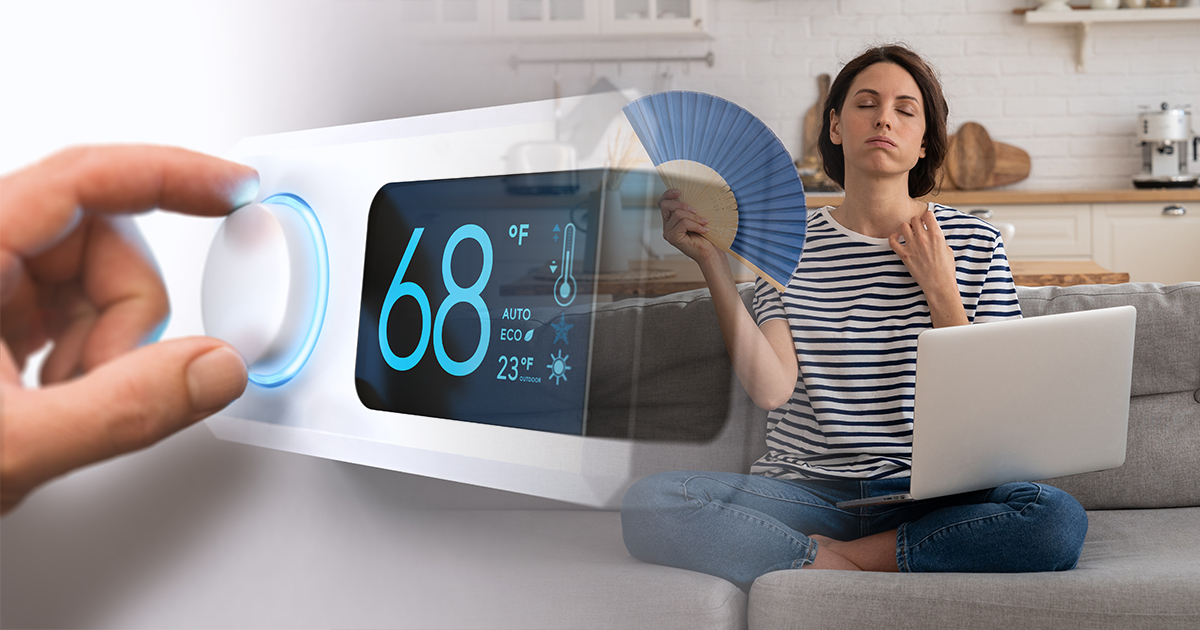
A common piece of advice is to raise your thermostat by a few degrees, say, from 72°F up to 75°F, to save money. But does turning your thermostat up really make a big difference on your Central Hudson bill? The data says: not really.
Using regional electricity price data and the 2024 Cooling Degree Day (CDD) records for Albany and the Hudson Valley region, we crunched the numbers for a typical 2,000 sq. foot home in the region.
The True Cost of Raising Your AC
For most local homes, raising your thermostat by three degrees (from 72°F to 75°F) saves about 7% to 8% on your cooling energy usage.
Translated into real dollars, even in a hotter-than-average summer like 2024, the savings are surprisingly small across the entire season:
| System Type | Cost at 72°F (Season) | Cost at 75°F (Season) | Total Saved |
| Window Units (Older/Standard) | $759 | $702 | $57 |
| Standard Central AC (SEER 14) | $542 | $501 | $41 |
| High-Efficiency Central (SEER 18) | $421 | $390 | $31 |
| Ductless Mini-Splits (SEER 22+) | $345 | $319 | $26 |
For most people, the difference between a crisp, cool home and a “sticky” one is worth about $30 to $40 for the entire summer. While every dollar counts, it’s probably not enough to justify the discomfort of a humid house.
Why Are the Savings So Small?
Cooling costs don’t drop as much as you’d expect for three main reasons:
1. The Delivery Fee “Floor”
A large portion of your electric bill consists of fixed delivery and service charges. Even if you use significantly less electricity, these fees remain steady, meaning your total bill won’t drop as much as your usage does.
2. The Humidity Factor
An air conditioner’s primary job in the Hudson Valley is dehumidification. When you raise the thermostat, the system runs less frequently. This allows humidity to build up. Because “moist” air holds more heat, your body feels much warmer at 75°F with high humidity than it does at 72°F with low humidity.
3. The Recovery Load
If you let your home heat up to 80°F while you are out, your walls, furniture, and flooring soak up that heat (thermal mass). When you turn the AC back down, the system has to work twice as hard for hours to remove that stored heat, often negating any savings you gained while you were away.
Reframing the Conversation Around Summer Comfort
No matter where you set your thermostat, your costs are driven by much larger factors than a three-degree dial shift. If you want to see a real drop in your summer bills, focus on:
System Efficiency: Upgrading from a window unit or an old SEER 10 system to a modern Heat Pump or Mini-Split can cut your cooling costs by over 50%—regardless of what temperature you choose.
Maintenance: A dirty condenser coil or a clogged filter can force your system to use 15% more energy just to do the same amount of work.
Air Sealing: Keeping the humid New York air out of your house is more effective than fighting it once it’s inside.
The thermostat can make a tiny difference, but your equipment and home efficiency matter more. You’ll get the most value out of having a system installed with precision, matched to your home’s unique needs, and maintained by experts.