If you’ve ever walked through the historic districts of Hudson, strolled past the old stone houses of Saugerties, or explored the colonial-era homes dotting Greene County, you’ve probably noticed something: massive chimneys. Those imposing stone stacks tell the story of how Hudson Valley families once battled brutal winters with nothing but fire and determination.
Today, with a simple turn of a thermostat, your natural gas furnace or heat pump springs to life. But that convenience represents the culmination of nearly 250 years of heating evolution, a story that played out right here in our communities, from the mountains of Windham to the streets of Catskill to the Town of Ulster.
The Wood Era: Survival by the Cord (Colonial Times–1880s)
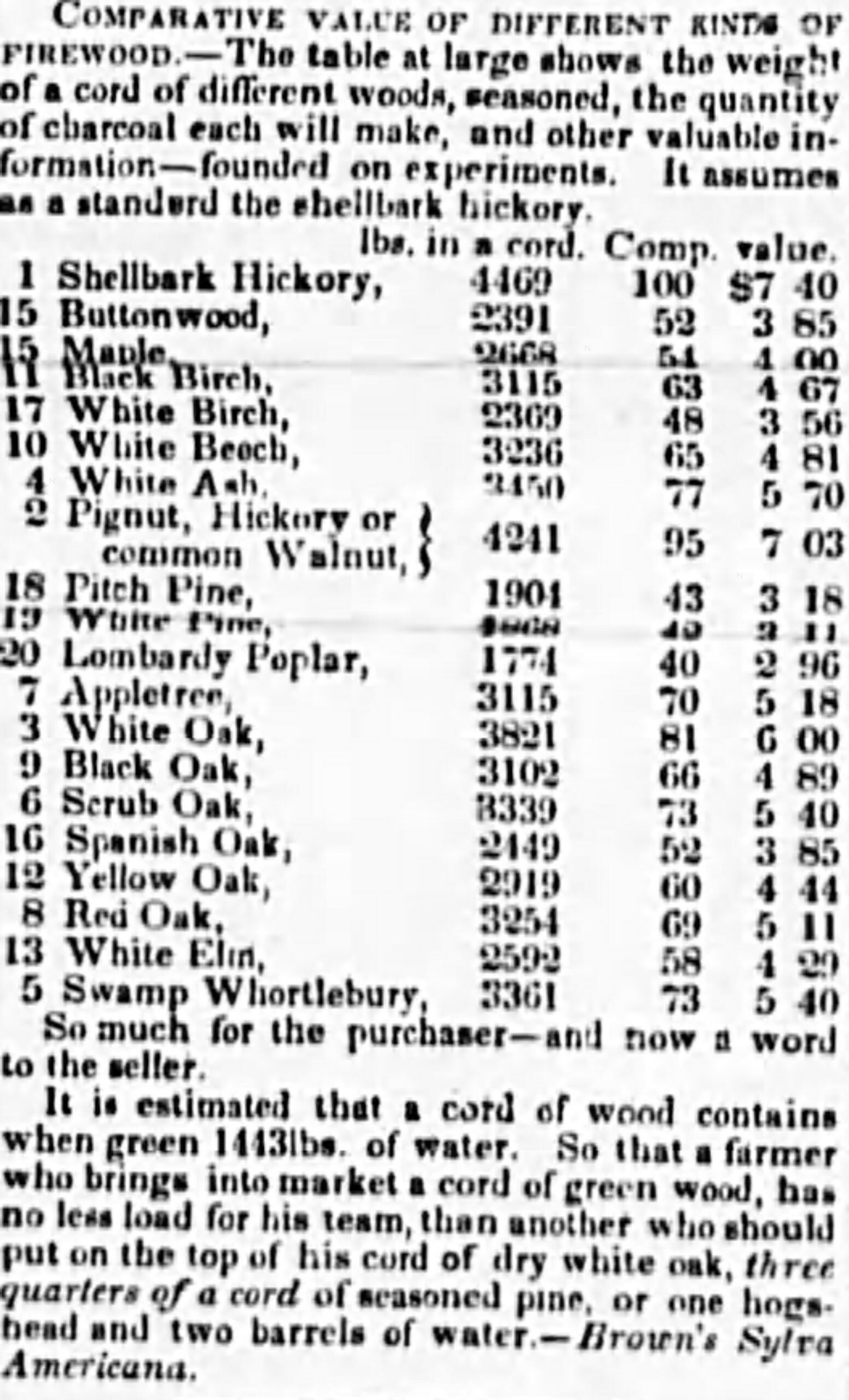
Early settlers in the Hudson Valley relied entirely on wood-burning fireplaces to survive the harsh Northeast winters. Those beautiful old stone houses we admire today were built around massive central chimneys, not for aesthetics, but for survival. A typical Hudson Valley household burned 18 to 20 cords of firewood annually just to stay warm.
For perspective, one cord of wood is four feet tall and eight feet wide, and weighs between 2,000 and 5,000 pounds. In Ulster County alone in 1820, there was a recorded population of 30,0934 people, which translates to roughly 1,200 households at the time. That would mean that for all of them to stay warm, they would need about 4,200,000 pounds of firewood every year.
All of that wood had to come from somewhere. By the early 1800s, the Catskill Mountains were being stripped bare by the combination of the tanning industry (which devastated hemlock forests throughout Greene and Ulster Counties), and later by the insatiable demand for fuel.
Wood heating was also brutally labor-intensive. Someone had to fell trees, cut logs, split kindling, haul it all home, stack it, carry it inside daily, tend the fire constantly, and clean out ashes.
The Coal Revolution: Cleaner, Hotter and Lighter
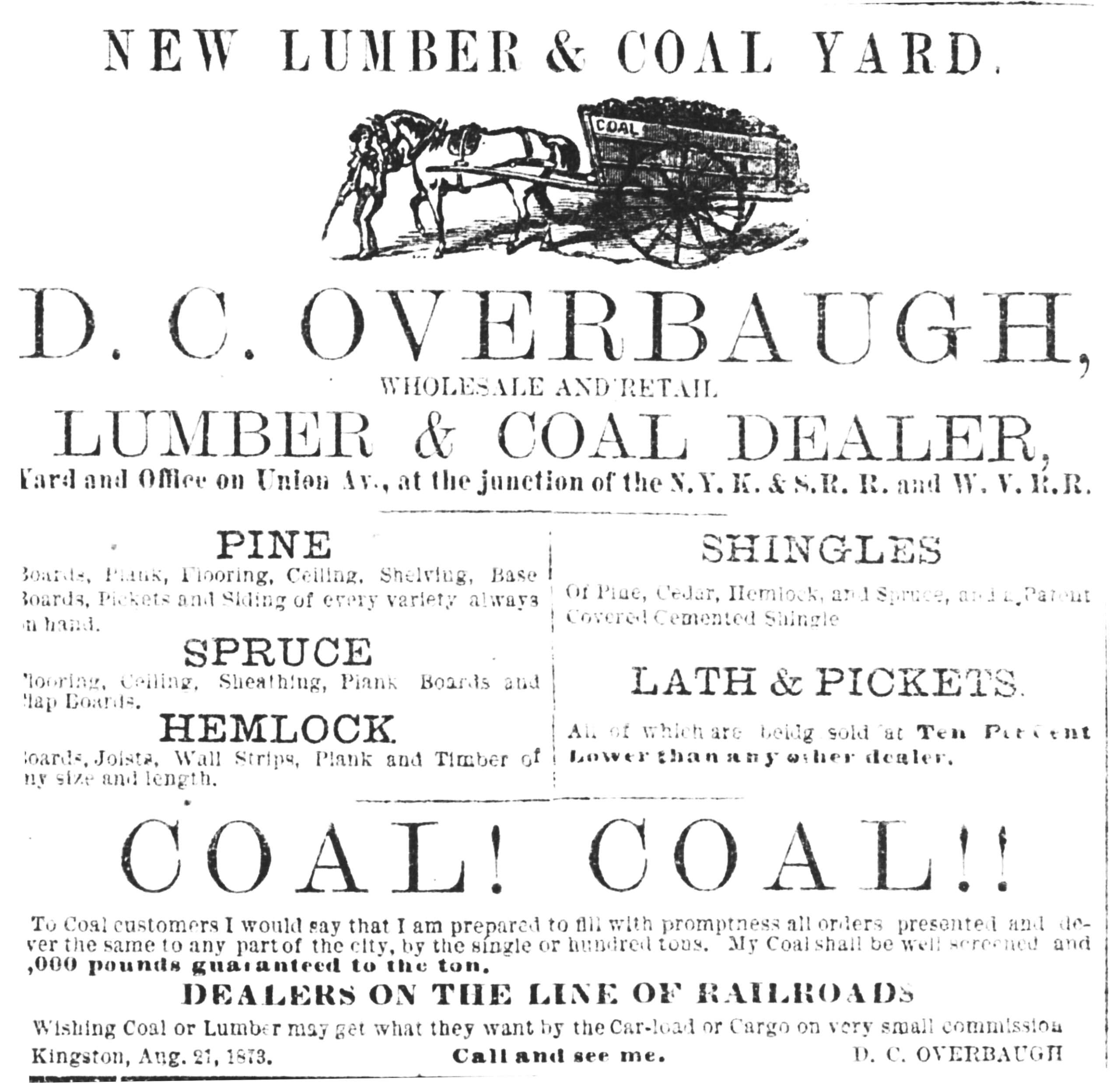
Everything changed when anthracite coal from Pennsylvania’s mines reached the Hudson Valley.
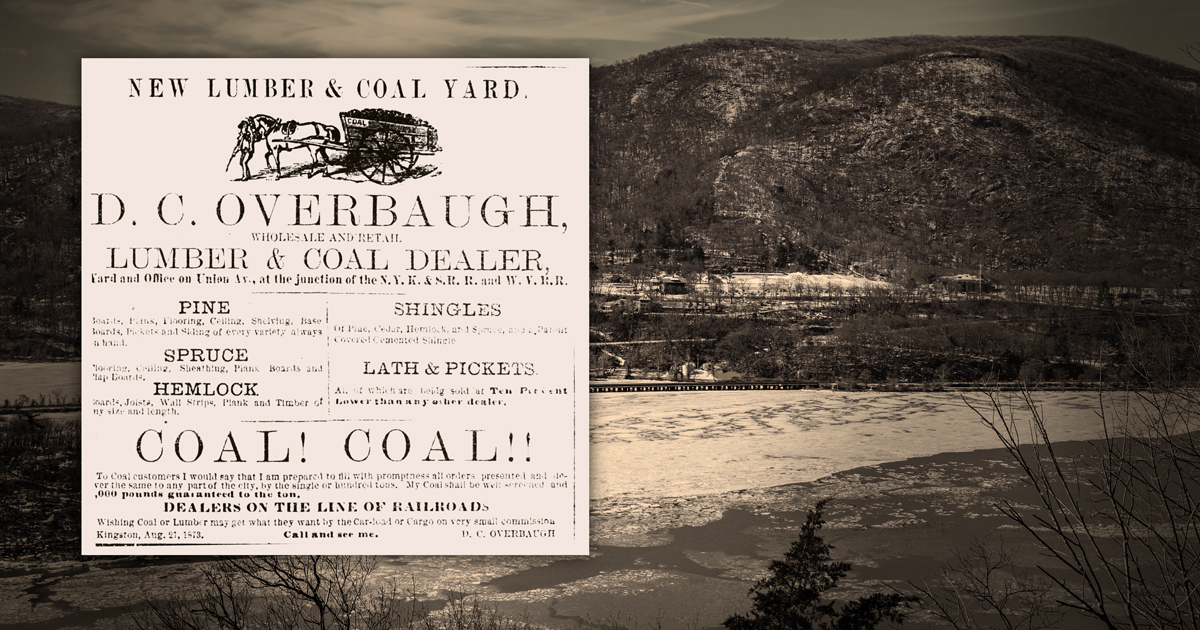
The Delaware and Hudson Canal, which opened in 1828, connected the country’s best coal fields directly to our region. Suddenly, fuel could be delivered to your doorstep rather than chopped from your woodlot. By the 1830s and 1840s, coal was rapidly displacing wood in homes throughout Kingston, Hudson, Catskill, and the surrounding areas.
Coal was revolutionary at the time compared to wood. It had:
- Higher heat output: Anthracite burned much hotter than wood
- Cleaner burning: Less smoke than wood (though still dirty by modern standards)
- Convenient delivery: Coal yards sprang up throughout our communities
- Space savings: A winter’s worth of coal took up far less room than 20 cords of wood
- Labor reduction: No more endless chopping and splitting
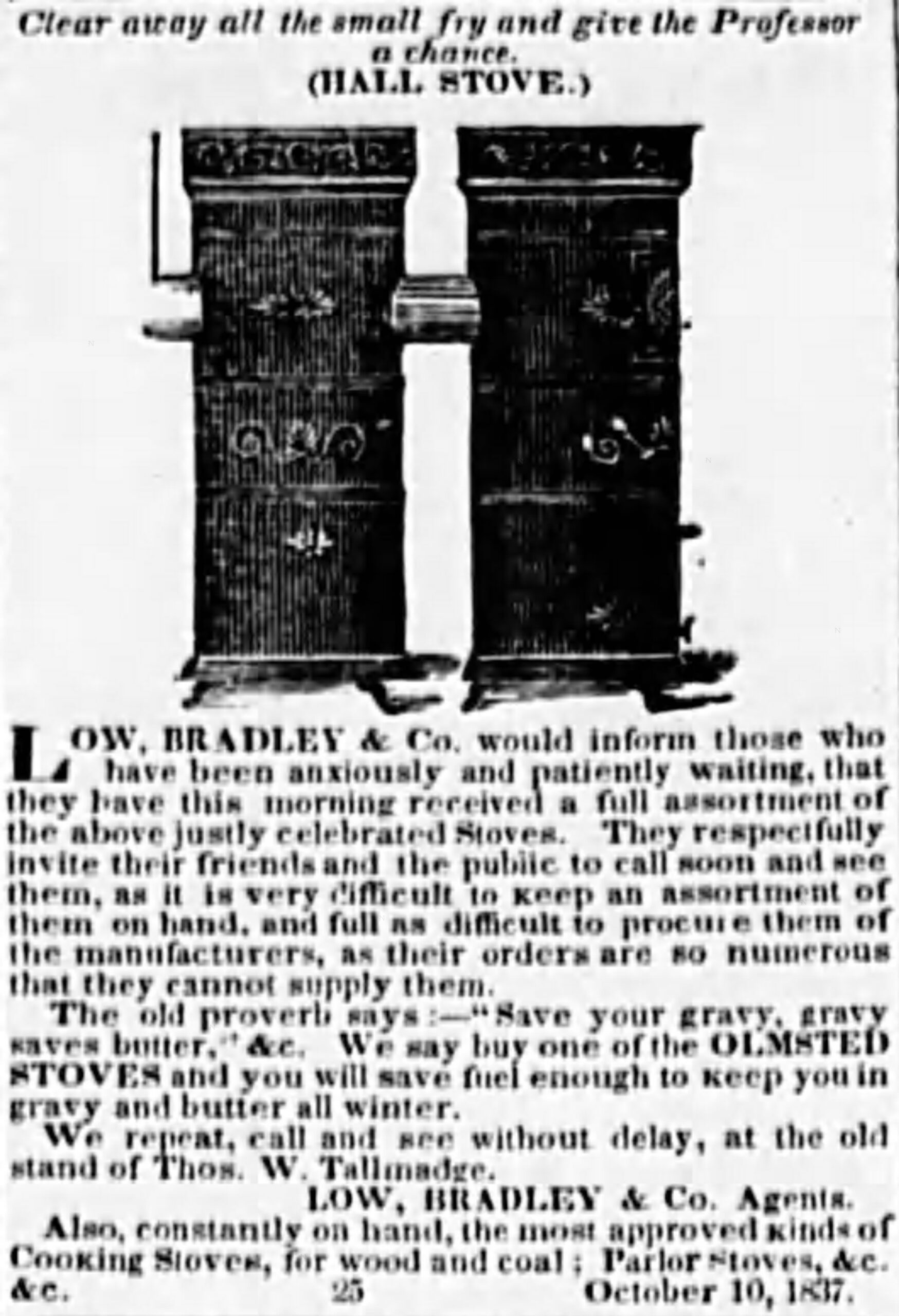
Cast iron stoves and early furnaces designed to burn coal transformed home comfort. For the first time, middle-class families could maintain somewhat consistent warmth throughout their homes.
The first census data we have available from 1940 about home heating shows that even by then, coal still heated a whopping 73% of New York state homes. This was followed by 18% fuel oil/kerosene, 4% wood, and 3% natural gas.
The Oil Boom: Push-Button Warmth (1920s–1970s)
Oil heating systems first appeared in the 1920s and gained serious momentum by the 1950s and 1960s in New York. In 1950, 41% of households used coal, 32% used heating oil , and 19% used utility gas.
By 1960, a whopping 65% of New York households used heating oil, 22% used natural gas, and only 9% were using coal.
For Hudson Valley homeowners, the appeal was immediate and obvious:
- Automatic operation: No more shoveling coal into the furnace
- Cleaner: No coal dust, no ash removal
- Safer: Reduced fire risk from handling solid fuel
- More efficient: Better heat output per dollar
Why did the Northeast embrace oil so thoroughly? Geography and infrastructure. Our region lacked the natural gas pipeline networks that served the Midwest and South, but we had excellent access to oil deliveries through an established distribution network. Tanker trucks replaced coal wagons, and families across Greene County, Ulster County, and Columbia County converted their furnaces.
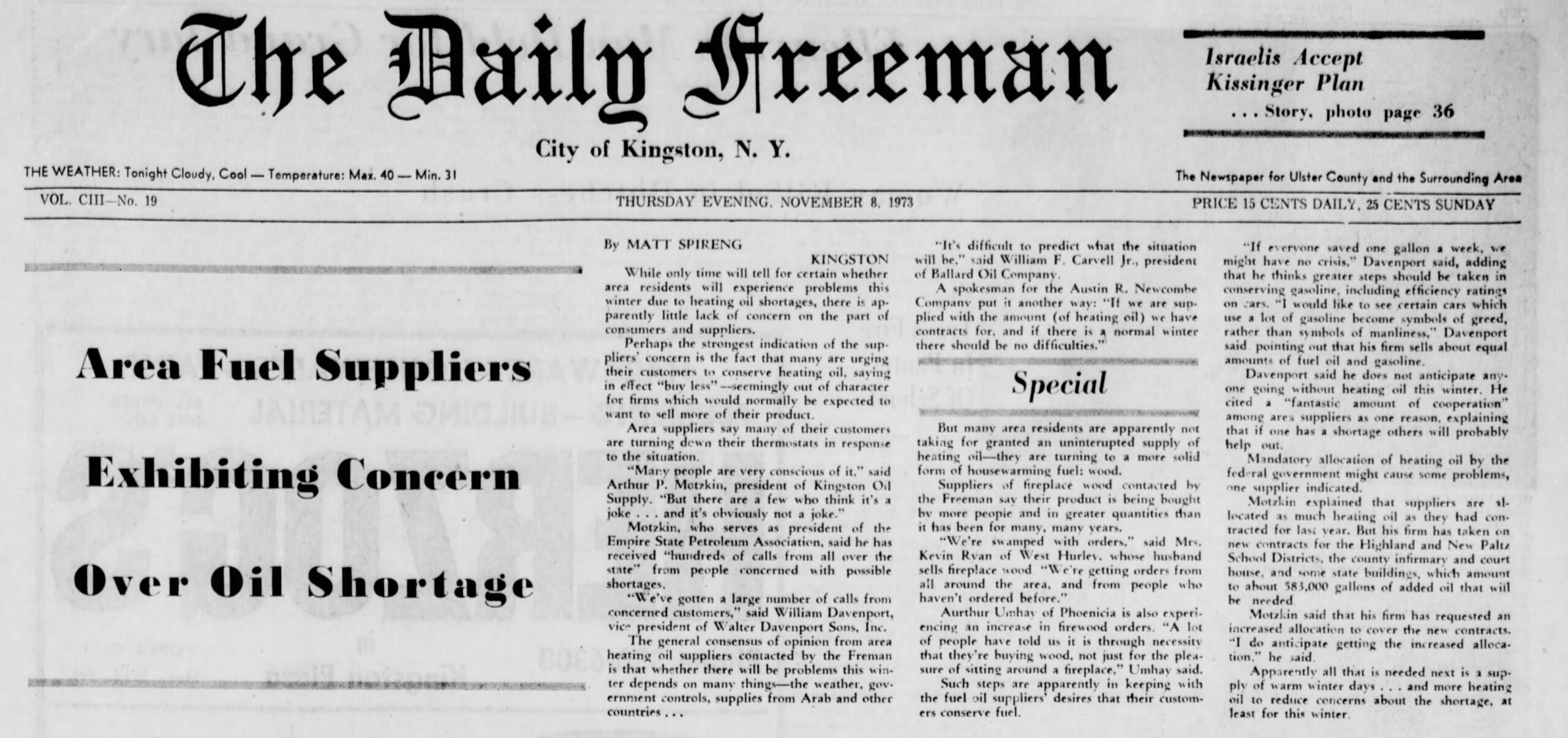
The 1973 OPEC oil embargo helped make the push away from heating oil. Crude oil prices spiked more than 200% between 1970 and 1975, and Hudson Valley families felt the pain immediately. That winter was a turning point: homeowners began looking for alternatives, and many found natural gas, which had its own shortages in the late 1970s.
The Natural Gas Era Begins
Unlike the Midwest, the Hudson Valley’s terrain and distance from major gas fields meant infrastructure arrived more slowly. Central Hudson began expanding natural gas service throughout the Mid-Hudson Valley, eventually reaching communities including Saugerties, Catskill, Kingston, and parts of Greene County.
The numbers tell a steady story of natural gas dominance. In 1970, gas was at a 37% adoption rate in New York, with fuel oil at 56%. By 1980, gas ticked up to 39%, while oil went down to 51%. By 1990, 45% of New Yorkers were on natural gas, with oil down to 39%. And in 2000, 51% of New Yorkers were on natural gas, with 33% on fuel oil and a growing number on electric heat at 8%.
For homeowners fortunate enough to have gas service available, modern high-efficiency furnaces and boilers can deliver up to 95%+ efficiency ratings, extracting nearly every possible BTU from the fuel.
Starting in 2013, we have had more localized numbers available, and things are indeed more nuanced in our region, which has everything ranging from small cities to rural, spread out towns in the mountains. The delivery and availability of fuel is a key factor here.
For example, in Ulster County, roughly 21% of homes are on natural gas, 45% are on heating oil, 14% are on electricity, and 13% are on propane heat.
For heating in Columbia County, 13% of homes are on natural gas, 17% are on propane, 46% are on heating oil, and 14% are on electric heating.
In rural Greene County, 9% of homes on natural gas, 48% are on heating oil, 17% are on propane, and 15% are on electric heating.
The Electric Future: Heat Pumps Come of Age
The heating story isn’t over.
Ductless mini-split heat pumps outsold gas furnaces in the United States in 2024 by a record-breaking 32% margin. New York State is betting heavily on this technology. Through the NYS Clean Heat Program, Hudson Valley homeowners can access:
- NYSERDA rebates ranging from $500 to $1,500+ per unit
- Additional incentives for low-to-moderate income households
- EmPower+ grants up to $10,000 for income-eligible homeowners
From 2013 to 2023, our analysis of US Census records have found that while electric adoption has increased, most of the movement was from fuel oil to cleaner propane. Seeing less fluctuation in electricity prices compared to other heat sources may help push homeowners toward heat pumps.
What This Means for Hudson Valley Homeowners
If you’re in Hudson, Catskill, Windham, Saugerties, Kingston, or the Town of Ulster, your heating choices depend on what infrastructure reaches your property:
Have natural gas service? A modern high-efficiency furnace or boiler remains an excellent choice, delivering reliable, affordable warmth with equipment that can last 15-25 years.
No gas lines? Propane and heat pumps offer a compelling and cleaner path forward than heating oil.
From Massive Chimneys to Mini-Splits
Walk through the Village of Catskill today and you’ll see the full arc of heating history in a single block: colonial stone houses built around enormous fireplaces, Victorian homes with coal cellar chutes, mid-century ranches with oil fill pipes, and now, the growing presence of outdoor heat pump condensers.
The Hudson Valley has ridden every wave of this evolution, from deforesting the Catskills for firewood to embracing Pennsylvania coal to building out natural gas networks.
Two centuries of progress means you can heat your home today without chopping a single log, shoveling any coal, or worrying about oil delivery schedules.
Precision HVAC has been helping Hudson Valley families stay comfortable through decades of heating transitions. Whether you need to replace your gas furnace, are considering a boiler upgrade, or want to explore heat pump options for your home, we’re here to help. Contact us today for a consultation.